Wednesday, October 31, 2012

0121 - A first sketch of Salvada


A first sketch of Salvada based on Google images and aero photos.

0120 - With a gate open to the solstice?


In this older aerial picture of the new site we can see very well the eastern side of the enclosure, namely the sinuous lobules of the inner ditch. We can see a gate that, by its location, seems to be facing the winter solstice. By combining several different images from Goolge and aero photographs we can almost have the whole plan of the site.

0119 - And a new (BIG) one


Just discovered, while preparing a field prospection. The Impact Study refers prehistoric material at the surface. Google reveals the rest (or almost).

It is a big one (480 x 430 meters), more or less the size of Perdigões, and have two external ditches, one apparently linear and the other sinuous like Xancra, Santa Vitória or Outeiro Alto (but much bigger). Inside, we can almost see more two other smaller ditches.

Like Porto Torrão and Pijotilla, a stream cut the enclosure, with a North-South orientation.

It is, naturally, in Alentejo hinterland, in the Beja district.  A work of ERA in a project of water supply of EDIA S.A.

Monday, October 29, 2012

0118 - Senhora da Alegria again


Here is a small enclosure detected in the highest platform of Senhora da Alegria set of enclosures.

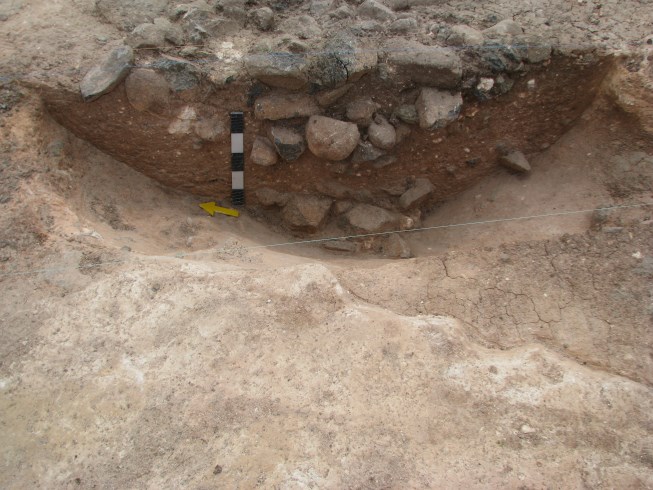
In terms of stratrigraphy, it is posterior to the Early Neolithic occupation and it seems to be prior to the Late Neolithic one.  It is a very small ditched enclosure, apparently oval, with only one gate. The ditch is deeper in the gate sides and progressively becomes lesser deep towards the back. It was filled with layers of stones and clay, with very few materials, mainly polished stone tools.

Inside, and not centred, there was only a fireplace, conserving large fragments of wood charcoal.

The plant and the inside fireplace remember other European small enclosures, namely in Ireland and in Italy. In Portugal, and from Late 3rd millennium, we have other examples in Alentejo, where a pit grave substitute the inside fireplace.

In fact, we are just start to become aware of the large diversity and complexity of the processes of enclosing that took place in Western Iberia Prehistory. New empirical data is emerging every day. But most of it still way from debate and scientific forums.

Friday, October 26, 2012

0117 – A new one?


It might be a new one. It really looks like a ditch, slightly sinuous, from a Prehistoric enclosure. But only a section was defined. It has a gate, but the ditch ends in one side and continues to an unexcavated area on the other side. There are also some pits.

This section of the ditch was surveyed in two areas. In both it reveals a depth of just 30 centimetres and no archaeological material was recovered. What can we make of this? A ditch started but that wasn’t finished? It would be the first evidence of such a situation and, therefore, the site would be quite important.

We shall see. For the time being, the area will be enlarged and we possibly have a larger definition of the plan of this strange ditch.

It is in Alentejo, of course, near Moura. A work of Era Company to Edia S.A.

Friday, October 19, 2012

116 - International Meeting


18 days to go...


Alasdair Whittle (Cardiff University, Wales, UK)
Single or multiple?: exploring narratives for the development of enclosures in central and western Europe from the sixth to fourth millennia cal BC
Niels Andersen (Copenhagen University, Denmark)
Were the causewayed enclosures and the megalithic monuments of the Funnel Beaker Culture in Denmark places for special deposits of fragmented, funeral materials?
Alex.M. Gibson (Bradford University, UK)
Burial & Enclosure in Middle Neolithic Britain: some observations and some problems of continuity.
Jean-Noël Guyodo & Audrey Blanchard (Nantes University, France)
The place of funerary practices in Late Neolithic ditched and walled enclosures in the West of France.
António Valera (NIA-ERA Arqueologia S.A., Portugal)
Funerary practices in the Perdigões enclosure: time, diversity and cosmogony in the treatment  conceded to the dead.
Filipa Rodrigues (Crivarque, Lda., Portugal)
Skeletons in the ditch: funerary activity in ditched enclosures of Porto Torrão (Ferreira do Alentejo,
Ana Maria Silva & Cláudia Cunha (Coimbra University, Portugal)
Human Bones, Burials and Funerary practices at Perdigões Enclosure
Michael Kunst (German Archaeological Institute, Madrid, Spain), João L. Cardoso (Univer. Aberta, Lisbon) &
A. J. Waterman (Department of Natural and Applied Sciences Mount Mercy University USA
Human Bones from Chalcolithic Walled Enclosures of Portuguese Estremadura: examples of Zambujal  and Leceia.
Susana Oliveira Jorge (Oporto University, Portugal)
Enclosures and funerary practices: about an archaeology in search for the symbolic dimension of social relations.
Andrea Zeeb-Lanz (Cultural Administration of Erbe Rheinland-Pfalz, Germany)
Human sacrifices with cannibalistic practices in a pit enclosure? The extraordinary early Neolithic site of Herxheim (Palatinate, Germany)
André Spatzier (Halle – Wittenberg University, Germany)
Warriors and victims? Gendered burial at a henge like enclosure near Magdeburg, Central Germany.

Cosmin Suciu (Lucian Blaga din Sibiu University, Romania)

Turdas Eneolithic enclosure system and its funerary practices.

Giulia Recchia (University of Foggia, Italy)
The Copper Age ditched settlement at Conelle di Arcevia (central Italy)
Leonardo García Sanjuán (Seville University, Spain)
Funerary practices in the Copper Age settlement of Valencina de la Concepción (Seville): formal  diversity and social rank.
Patricia Ríos, Corina Liesau & Concepción Blasco (University Autónoma of Madrid, Spain)
Death areas in the ditched enclosure of Camino de Las Yeseras.  A reference site in the center of the Iberian Peninsula.
Victor Hurtado & Carlos Odriozola (Seville University, Spain)
Ditched enclosures in La Pijotilla and San Blas (Badajoz, Spain)
J. E. Marquéz Romero & Víctor Jiménez Jaiméz (Malaga University, Spain)
Meeting synthesis

Field trip:
Perdigões enclosure (Reguengos de Monsaraz); Santa Vitória enclosure (Campo Maior); Évora city.

Thursday, October 11, 2012

0115 - New papers on Portuguese ditched enclosures


With free download here.

Helmut Becker e António Carlos Valera
LUZ 20 (MOURÃO, ÉVORA): RESULTADOS PRELIMINARES DA PROSPEÇÃO GEOFÍSICA (MAGNETOMETRIA DE CÉSIO)
Luz 20 (Mourão, Évora): preleminary results of geophysical survey (caesium magnetometry)

Helmut Becker, António Carlos Valera e Patrícia Castanheira
MONTE DO OLIVAL 1 (FERREIRA DO ALENTEJO, BEJA): MAGNETOMETRIA DE CÉSIO NUM RECINTO DE FOSSOS DO 3º MILÉNIO AC.
Monte do Olival 1 (Ferreira do Alentejo, Beja). Caesium magnetometry in a ditched enclosure from the 3rd millennium BC.

António Carlos Valera
“ÍDOLOS ALMERIENSES” PROVENIENTES DE CONTEXTOS NEOLÍTICOS DO COMPLEXO DE RECINTOS DOS PERDIGÕES.
“Almeriense Idols” from Neolithic contexts of the enclosures complex of Perdigões

Tuesday, October 9, 2012

0114 - What to do with them

This is a question that should be asked more often. There are too many enclosures excavated and neglected, with their structures exposed to the natural elements and anthropic ones. This is not a specificity of prehistoric enclosures, but it is a major problem in their communication. Difficult to interpret and to communicate to the general public, the conditions of the few that are available for public visiting in Portugal are depressing, and definitely not concurring for public awareness of the importance of this kind of heritage and public mobilization for its value, defence and preservation.

When we follow a sign and find this...

 
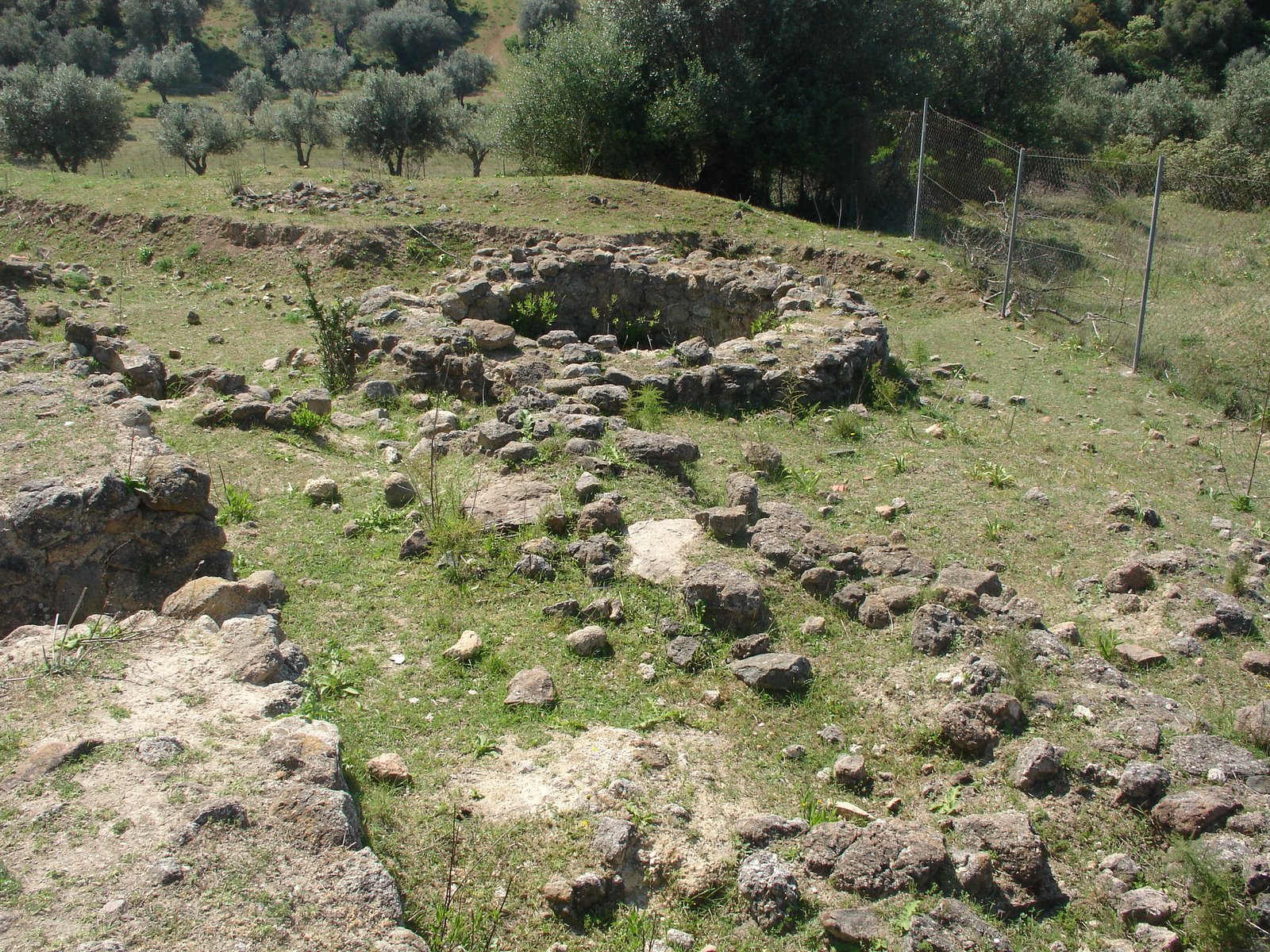
Walled enclosure of Monte da Tumba (Torrão), visited two weeks ago.

... what really should we think? If we cannot afford the preservation of an enclosure for public visiting in positive conditions, than we should be aware that presenting them in unacceptable conditions is just stupid, for we will be sending all the wrong messages I can imagine.  This situation is generalized. Sometimes we can see that local authorities take some care of this heritage, but generally with local resources, not using experts on the matter. But even that is rare. Abandonment is the norm.

If the country doesn’t have the means for keeping these sites presentable, because there is no money, because there is not enough cultural market for archaeological heritage, then maybe it is better to cover some of them: the ones that don’t have any kind of regular concern.
 
Maybe confronted with that, local, regional and national spirits would have a different attitude to find the means or assume that is just impossible.


Wednesday, October 3, 2012

0113 - Dating ditches and funerary practices


Tomorrow, at the VI Archaeological Meeting of Southwest Iberia, a paper will be presented about a radiocarbon sequence of dates for Perdigões set of enclosures.

“Valera, A.C, Silva, A.M. & Márquez Romero, J.E., “The temporality of Perdigões enclosures: absolute chronology of structures and practices”.

This sequence, of 34 dates, was obtained in the course of three projects integrated in the Global Programme of Research of Perdigões, coordinated by the NIA-ERA: a project of NIA-ERA aiming precisely to established the temporalities of the set of enclosures; a project of the Department of Anthropology of Coimbra University in collaboration with NIA-ERA dedicated to funerary practices in Perdigões; a project of the Malaga University developed in the NE gate of the outside enclosure.

The sequence reveals an occupation of more than a millennia, between 3360 and 2100 BC, corresponding to the Late Neolithic, Chalcolithic and transition to the Bronze Age. It also reveals a provisory image of progressive enlargement of the site during this time span and the progressive diversity of funerary practices, especially during the third millennium BC.

We will be coming back to this important chronological sequence during the meeting taking place in next November in Lisbon on enclosures and funerary practices.

And we hope to publish it next year.

Friday, September 28, 2012

0112 - Interpreting geophysics


Here is the image of the magnetogram of the ditched and palisade enclosure of Monte do Olival 1 with Helmut Becker’s interpretation of the negative structures present at the site. This interpretation will be published next month in the electronic journal Apontamentos de Arqueologia e Património (a free download journal).

One of the things we learn with Helmut is that having a magnetogram is not enough. We also need good interpretation, based on the knowledge of geophysics, but also of the type of contexts we are dealing with.

Monday, September 24, 2012

0111 - Re-excavating ditches


Sections of the outside ditch at Bela Vista 5:a previous layer was excavated in the centre and after refilled with other deposits.


This is, in a certain way, another version of overlapped ditches problem. In fact, it is frequent to record evidences of ditches that were reopened, by the re-excavation of part of its previous fillings. It is important to notice that only when the reopening is partial is it
detectable by archaeology. The total remove of previous filling deposits leaves no evidence, and if they occurred, then these activities would have been even more common.
This creates problems to ditch dating, because there might be a significant time between the initial excavation of a ditch and its last filling sequence. Only with several sections and good dating sequences we can evaluate these problems.

But another problem is why they reopened some ditches? And why frequently just a central part of the ditch, leaving a ditch with “walls of sediment”? Is it because they want to rapidly fill it again with new deposits and materials? They must have done so, otherwise those “walls of sediment” would have been eroded (and we can clearly see them in some sections, like the one presented here).

This kind of stratigraphic sequences points to human intentionality in the formation of the deposits inside ditches, not just because of the materials or the structured organization they might present. The structure of the deposits itself may be an argument to that intentionality.

Thursday, September 20, 2012

0110 - Overlapping ditches

This is an important issue for ditched enclosures understanding that hasn’t been researched as it deserves in Iberia. Here is a situation from Perdigões that we just started to approach.


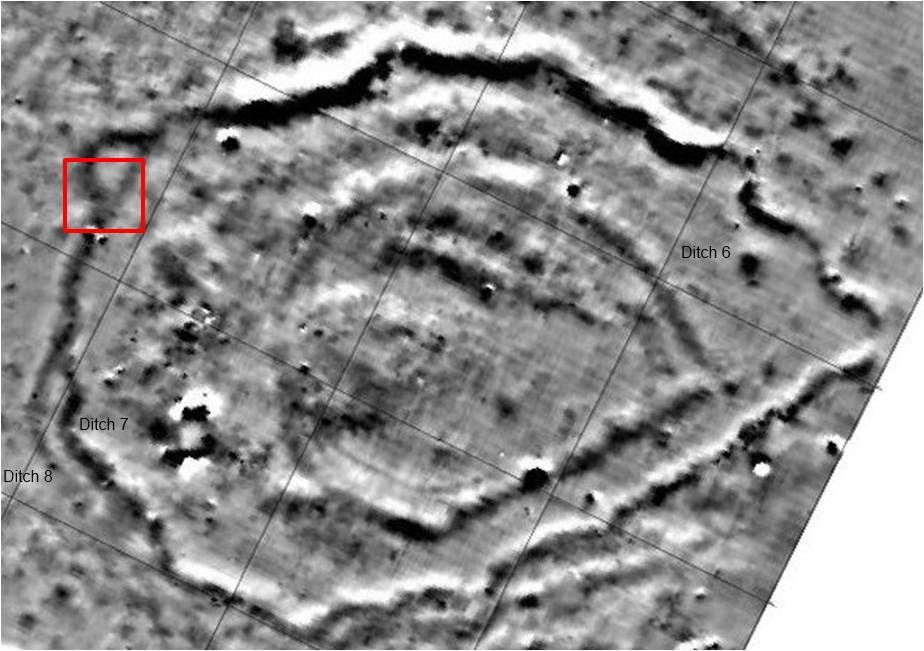
 In sector P we open an area to research the overlapping of ditches 7 and 8. The first observation is that, contrary to what we assumed by the geophysics magnetogram, ditch 8 is older than ditch 7. In fact, it is ditch 7 that cuts ditch 8, and partially “walks over it” in the excavated section.


And that is really odd. Why open a ditch (which implies a lot of work and effort) in the bed rock, and then cut just partially, in small distances, a previous ditch? Why not use more of that previous ditch?  Or, why not fully avoid that previous ditch?

It seems that they just wanted to cut a new ditch, with a wavy plan, with no regard to previous ditch 8. But, if we look to the magnetogram, ditch 8 is a concentric mach to previous ditch 6. And why the ditch has part f its trajectory inside ditch 7, and then sudden  get outside, and then curved to be over it, just to get in again?

The conclusion is that no easy modern rational explanation can deal with these strange practices of opening ditches at Perdigões. We must keep our minds opened in the presence of these enclosed spaces.  The previous seems to condition the posterior, but in very complex ways not easy to explain.

Sunday, September 16, 2012

0109 - Geology and enclosures

In the paper quoted in the last post I draw attention to the relation of the decorated Bell Beaker pottery contexts and the geology of South Portugal. At the presentation in the 2005 meeting I showed the following map that clearly shows the concentration of the sites within well defined geological borders.


The middle Guadiana basin, with its geological diversity and good soils and plains, and the poor littoral sandy platform and the schist with wavy topography at the south, making the north limit of the mountains that separate Alentejo from Algarve littoral platform.

Well this same situation can be observed in the enclosures distribution as we know it today (or for the megalithic or hypogeal graves). The line in the map of enclosures marks the same geological limit of the first map. And it speaks for itself: there is a strong connection between the structural geology of south Portugal and the structural aspects of its human occupation.


Friday, September 14, 2012

0108 - Ditches and Bell Beakers


Bell Beakers are not common in Portuguese ditched enclosures. Well, in the small ones. There, they are virtually unknown. Even in those built in bell beaker times.

But at the enclosures that grew bigger, to became large ones, like Perdigões and Porto Torrão, beakers are present and they can be very well represented (as it happens in Porto Torrão).

But that is not it. A pattern emerged in the last years. In small sites, sometimes reoccupations of walled enclosures (but never ditched ones), we tend to have beakers of a mono style (maritime, or incise, or combed geometric). But the large ditched enclosures are the only ones where we have all these styles together.

A paper of mine has recently been published on this issue here.

Notice that in the maps, Perdigões is told to only have maritime and incised beakers. Well, this summer things changed, and combed geometric beakers also are present.

In fact, as Perdigões, Porto Torrão and Bela Vista 5 chronologies show, at beaker times ditches were still being built in west Iberia. Sometimes enlarging previous enclosures (like in Perdigões), sometimes creating original enclosures (like at Bela Vista 5).

But only in the big ones we have the presence of the three main styles. Another sign of the social role of these large enclosures.

Wednesday, September 12, 2012

0107 - The small enclosure of Carrascal (Porto Torrão)


It was a project developed by Era Arqueologia, and the geophysics was, of course, done by Helmut Becker with the results he usually provides.

Just 800 meters way from Porto Torrão traditional limits, and associated to a large area of necropolis, here is a small and perfectly circular ditched enclosure, with just 20m diameter.

A gate is visible at NW, possible orientated to sunset summer solstice.

At Porto Torrão things are much more complex than everybody expected and, I would argue, still expect.

Saturday, September 8, 2012

0106 - “Idols” in ditches

Is the second situation in Perdigões, separated from the first one by more the 500 hundred years: the depositions of idols in the bottom of ditches.

The first situation was detected in ditch 1 (Mata et al., 2011), dated from de second half of the 3rd millennium BC. A schist idol, with lateral cuts, was found deposited just at the bottom of the ditch, associated to a complete pot and some faunal remains.


Idol in Ditch 1 (After Mata et al. 2011)
 
The second situation was recorded this year, in ditch 12, dated from Late Neolithic. An assemblage of 5 Almeriense Idols was recovered at the bottom of the ditch. I am just finishing a paper on this context that will be published next October.

 
Idols in ditch 12.

These situations, although apart in time, document a same general fact: the filling of the ditches was, frequently, the result of intentional human action and they might document a ritualization of the beginning of those processes. Unless we admit they were just lost by someone passing by.

More and more evidences are appearing every year to create problems to the “erosion” and “garbage” explanations of ditch fillings and to support other interpretations that take into account human activity and intentionality.  

References:

Mata, E., Fernández, J. e Caro, J.L. (2011), "Figurinha en xisto procedente del relleno del foso 1 del complexo arqueológico dos Perdigões (Reguengos de Monsaraz", Apontamentos de Arqueologia e Património, 7, NIA-ERA, p.19-21.

Tuesday, September 4, 2012

0105 - Bela Vista 5


Location: Beja municipality, Beja district, Alentejo, South Portugal)
Chronology: Late Chalcolitic /Early Bronze Age
Bibliographic references: unpublished.

The archaeological materials, namely the pottery, already suggested that this enclosure would be a later one in the context of Iberian ditched enclosures (see post 96).

Radiocabon recently confirmed that idea, by putting the ditches in the last three hundred years of the 3rd millennium BC.

But there are earlier pits and pits later than this time span, so the enclosure was added to an already existing site and pits continued to be built after the ditches were filled.

And not far (less than a kilometre to East and to West), necropolis of hipogea from Late Neolithic and Bronze Age were detected and excavated.

Friday, July 13, 2012

0104 - Enclosures and abandonment (1)

The walled enclosure of Monte da Tumba (Torrão, Alentejo) is a good example of an intermediate abandonment in a site that originally (Silva & Soares, 1987) was considered to have a continuous sequence of occupation. 


“The potent stratigraphic sequence of Phase I is interrupted by also potent wall ruins. Over these ruins a new occupation phase took place and new constructions are built. In this phase, a house seems to have been burned and the roof has fallen, preserving a material assemblage in good state. New ruins are then identified and a new (3rd) phase is defined, also with new constructions, like a central tower. According to the excavators, this sequence of continuous occupation is of 500 years.”

“In this discourse, no temporary abandonments were considered. In reality, it is not probable that two moments where powerful wall ruins are formed over which new construction are built and substantial changes in material culture can be observed (like the appearance of copper metallurgy in Phase 2 or the bell beakers in phase 3) didn’t implied interruptions in the occupation of the site. Ruins and generalized destructions as described do not happen in a day (unless by catastrophe) fallowed by a new occupation next day, with new constructions, new technologies and new artefacts previously inexistent. And we must remember we are talking about 500 years.”
(taken from Valera, 2003)

In fact, this sequence clearly suggests the existence of periods of abandonment in the sequence of occupation of the site. Determine the reasons of those abandonments, their dynamics and duration (all people left at the same time? They intend to come back? Were the same, their descendents or others that reoccupied the site? Etc.), and the reasons of reoccupation are central to understand the role of these sites in local and regional settlement networks and their historical circumstances throughout time. Abandonments are as important as occupations, just like what is missing is as important as what is present. 

References:
Silva, C.T & Soares, J. (1987), “O povoado fortificado calcolítico do Monte da Tumba I – escavações de 1982-86 (resultados preliminares)”, Setúbal Arqueológica, VIII, Setúbal, p.29-79.
Valera, António Carlos (2003), “Mobilidade estratégica e prolongamento simbólico: problemáticas do abandono no povoamento calcolítico do Ocidente Peninsular”, Era Arqueologia, 5, Lisboa, p.126-149. (http://www.academia.edu/attachments/2325706/download_file)

Friday, July 6, 2012

0103 - The importance of good geophysics

The importance of good geophysics is evident. It can provide a global image of a site (that we can only have by traditional archaeological excavation after at least some decades) allowing the development of the scientific inquiry and research, it is not intrusive, so it doesn’t rise the problems that an excavation does, and provides a powerful planning tool (in research or impact assessment contexts).

At Perdigões, the geophysics done by Helmut Becker (Márquez-Romero et al. 2011; Valera et al., in press) is important, not just for the general interpretation of the site, but because it allows the contextualization of the excavated areas in a broader picture. Now we know exactly where we are in the site. But also important, we can plan where we want to be.

And in this year campaign, this is one of the places we want to be: the area inside Late Neolithic Ditch 6, where the geophysics showed two tiny lines that might correspond to palisades.

Fragment of the geophysics of Perdigões with the location of the area to survey

Well, we prepared the excavation by removing the ploughed upper level, and there it was: Ditch 6 and inside two smaller parallel ditches corresponding to the geophysical image (with an extra: a small pit between Ditch 6 and the first inside line). The goals, now, are characterize these structures, try to determine their functionality and date them.

Survey area, confirming the presence of the structures.

References:
Márquez, J.E.; Valera, A.C.; Becker, H.; Jiménez, V. & Suárez, J. (2011), “El Complexo Arqueológico dos Perdigões (Reguengos de Monsaraz, Portugal). Prospecciones Geofísicas – Campaña 2008-09.” Trabajos de Prehistoria, Madrid.

Valera, A.C, Márquez, J.E., Becker, H., Jiménez, V. & Suárez, J. (in press B), “O Complexo Arqueológico dos Perdigões: nova imagem e novos problemas proporcionados pela prospecção geofísica” Actas do 8º Encontro de Arqueologia do Algarve, (2010), Silves.

Wednesday, July 4, 2012

0102 - List of Portuguese enclosures updated

Click to enlarge

Walled enclosures (red squares)
Ditched enclosures (yellow circles)
Walled and ditches enclosures (blue stars)

It will stay available in the page dedicated to maps.

Sunday, July 1, 2012

0101 - Fonte Quente walled enclosure


Image of the wall structures on Fonte Quente (taken from Batata & Borges, 2011)


Location: Tomar municipality, Santarém district, Central Portugal)
Chronology: Chalcolithic
Bibliographic references: Oosterbeek, 1994; Batata & Borges, 2011.

Known since the early times of the XX century, and with several interventions along that century, the Fonte Seca site was recently submitted to a large area excavation, due to the construction of a highway (Batata & Borges, 2011). This last intervention revealed a large walled enclosure. According to the excavators, it is now one of the biggest of Central Portugal, with an estimated area around 20ha.

Three walls were detected, some with semi circular bastions. Metal artefacts and evidences of copper metallurgy were also recorded as well as beaker pottery and schist plaques with geometric decoration (typical of Alentejo region, but also present in the Tejo valley).

In an earlier survey (Oosterbeek, 1994) one radiocarbon date was associated to one of the walls: 3790+/-120BP. Calibrated at 2σ, and due to its large standard deviation, this date presents a huge interval between 2600 – 1850 cal BC, but that goes well with the later materials, like the beaker pottery.  

Bibliographic References

OOSTERBEEK, Luiz (1994) – Echoes from the east: the Western Network – North Ribatejo (Portugal): an insight to unequal and combined development, 7000 – 2000 B.C., University College London, Institute of Archaeology.

BATATA, C. & BORGES, N. (2011), “A importância da Fonte Quente enquanto “Lugar Central” no contexto do povoamento Pré-Histórico do Alto Ribatejo, durante a Pré-História Recente”, Resumo dos trabalhos de escavação arqueológica realizados no decorrer da empreitada do Sublanço do IC9 – Nó de Carregueiros / Tomar, E.P. Estradas de Portugal.